


WE TREAT
Big Toe Joint Pain Treatment in Leeds
From bunions to arthritis, our expert care is tailored to your needs.
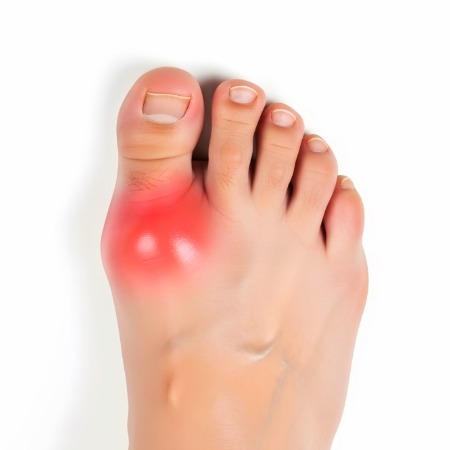
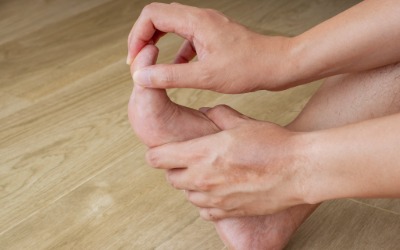
When your big toe joint loses its flexibility, it is known as hallux limitus, progressing to hallux rigidus when the joint stops bending entirely. Think of this joint like a door hinge: two opposing bone surfaces held together by ligaments, cushioned by smooth cartilage, and lubricated by synovial fluid inside a protective capsule. When this natural hinge system breaks down, the resulting stiffness and discomfort can destroy the joint, ultimately leading to big toe osteoarthritis.
Why is my big toe stiff? Understanding Hallux Limitus symptoms
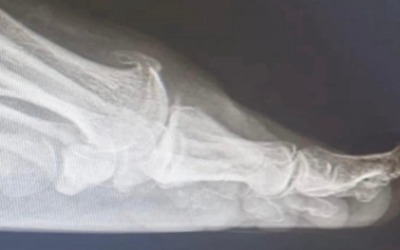
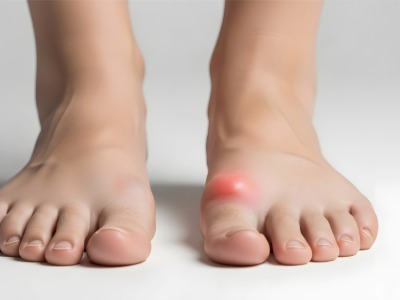
Hallux Limitus refers to a loss of flexibility in the big toe joint (the first metatarsophalangeal joint). Specifically, it occurs when the toe cannot bend upwards towards you as far as it should. Because this is a progressive condition, your symptoms may vary depending on your activity level.
The more force you place through your feet, whether standing for long hours, walking, or playing sports, the more noticeable the discomfort becomes.
How it affects your movement
When you walk, your big toe is designed to bend and act as a lever to push you forward. With Hallux Limitus, the joint can temporarily lock while you are weight-bearing. This means your toe might feel perfectly normal while you’re sitting down, but become stiff and restricted the moment you stand up and move.
Key symptoms to look for:
- Stiffness and Clicking: A grinding sensation or audible click when moving the toe.
- Pain During Activity: Discomfort that worsens when pushing off the ground.
- Bony Growths (Exostosis): A hard, bony lump or “spur” developing on the top of the big toe joint.
- Localised Swelling: Inflammation specifically over the top of the joint area.
What Causes Hallux Limitus?
- Injury and Trauma: This can be a one-off incident, such as a severe stubbing of the toe or a fracture, or repetitive “micro-trauma” from activities that put constant pressure on the joint.
- Footwear Choices: Rigid or ill-fitting shoes can aggravate the joint. Steel-toe-capped boots often lack the necessary flex, forcing the big toe to jam against the top or front of the boot.
- Foot Structure and Anatomy: Small variations in your bone structure can lead to big problems. An elevated first metatarsal (the bone behind the toe) or an unusual bone length can prevent the joint from sliding smoothly, causing it to lock up during movement.
- Inflammatory Conditions: Systemic issues like gout or other forms of inflammatory arthritis can damage the joint lining, leading to stiffness and bony growths associated with the condition.
Early intervention is key to preventing these causes from leading to permanent joint damage.
How We Can Help Manage Your Foot arthritis
By understanding the biomechanical root cause of your pain
While osteoarthritis is a chronic condition, podiatry offers several effective, non-invasive treatments to reduce pain, improve your mobility, and slow the progression of joint wear. non-invasive treatments to reduce pain, improve your mobility, and slow the progression of joint wear.
Custom Orthotics: These precision-crafted medical insoles are tailored to your unique foot shape
They help by:
- Redistributing Pressure: Shifting weight away from painful, arthritic joints to more tolerant areas of the foot
- Improving Alignment: Correcting abnormal gait patterns to reduce the strain on your ankles, knees, and hips
- Shock Absorption: Dissipating the force of each step to protect sensitive bone surfaces
- Footwear Advice: We can recommend specific shoe features, such as stiff soles or rocker-bottom designs, that limit the painful bending of affected joints, particularly in the big toe and midfoot
- Physical Therapy & Strengthening: Targeted exercises can strengthen the muscles supporting your joints, improving stability and maintaining your range of motion
- Steroid Injections: For acute flare-ups, localised injections can provide temporary but significant relief from inflammation and pain.
Other Non-surgical Treatment for Hallux Limitus Includes:
- Physiotherapy eg joint mobilisation, exercises, ice
- Anti-inflammatory medication
- Footwear advice
If this first stage approach does not provide the correct level of relief:
- Steroid injection (cortisone)
- Ostenil injection (Hyaluronic acid to help reduce pain and stiffness in the treatment of osteoarthritis)
Surgical Treatment for Hallux Limitus
There are several surgical treatments available at The Yorkshire Foot Hospital for hallux limitus. Following consultation and a review of your x-rays, your consultant podiatric surgeon will decide upon the best treatment of choice based on a few factors:
- Your overall general health, age and lifestyle
- Any underlying biomechanical issues
- Whether you wish to return quickly to sport
- The severity of the disease
Understanding Hallux Rigidus: Symptoms and Signs
Hallux Rigidus: When Big Toe Stiffness Progresses
If left untreated, the wear and tear associated with Hallux Limitus can advance into a more severe condition known as Hallux Rigidus. This represents the later stage of joint deterioration, where the protective cartilage has worn away significantly, leading to a “frozen” or rigid joint.
What are the Symptoms of Hallux Rigidus?
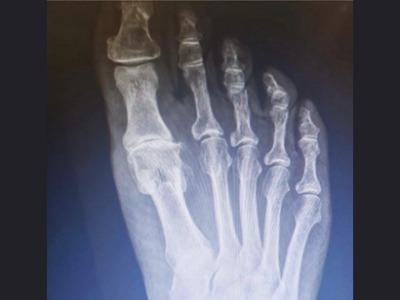
As the articular cartilage continues to break down, the space within the joint disappears. This results in bone-on-bone friction, leading to significant joint degeneration.
Common signs include:
- Total Loss of Movement: Unlike the partial stiffness of Hallux Limitus, Hallux Rigidus often results in no bend at all within the big toe joint.
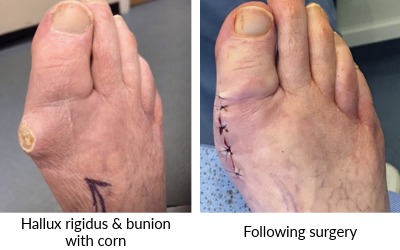
- Significant Bony Growths: A prominent, thickened bony lump (exostosis or bone spur) typically develops on the top of the joint, which can make wearing certain shoes very painful.
- Constant Discomfort: You may experience persistent pain, swelling, and a deep ache over the top of the joint, even when resting.
- Changes in Gait: Because the toe no longer bends to push you forward, you may find yourself walking on the outside of your foot to compensate, which can lead to secondary pain in the ankle or knee.
Whilst Hallux Rigidus is more advanced, there are still many ways we can manage the pain and keep you mobile without proceeding straight to surgery.
Non-surgical Treatment for Hallux Rigidus
Our First-Stage Treatment Options:
- Custom Orthotics with Rocker Soles: We can design bespoke insoles that incorporate a “rocker” design. This mimics the natural bend of the toe, allowing you to “roll” through your step without the painful joint having to move.
- Specialised Footwear Advice: We provide guidance on selecting shoes with stiff, supportive soles or rocker-bottom profiles that protect the joint from further irritation.
- Anti-Inflammatory Management: Recommendations for medication can help reduce the internal swelling and “deep ache” often felt in the joint.
If Further Relief is Needed:
If these initial steps don’t provide the level of comfort you need, we can progress to Steroid Injections (Cortisone): A targeted injection into the joint can provide powerful, localised relief from inflammation and help settle acute flare-ups.
Our mission is to keep you active and pain-free while preserving your joint function for as long as possible.
Surgical Treatment for Hallux Rigidus
If non-surgical treatments no longer provide sufficient relief, surgery can be a highly effective way to eliminate pain and get you back on your feet. At The Yorkshire Foot Hospital, we offer a range of advanced surgical procedures specifically for Hallux Rigidus.
Following a thorough consultation and a review of your X-rays, your Consultant Podiatric Surgeon will work with you to determine the best course of action. We don’t believe in a “one size fits all” approach; instead, we select the most appropriate procedure based on several key factors:
- The Severity of the Disease: The amount of joint degeneration and bone spurring present will guide whether we aim to “clean up” the joint or fuse it for permanent pain relief.
- Your Lifestyle and Goals: Are you looking to return to high-impact sports, or is your priority comfortably wearing specific types of footwear?
- Biomechanical Profile: We assess any underlying foot mechanics that may have caused the condition to ensure the surgical outcome is stable and long-lasting.
- General Health and Age: Your overall well-being is our priority, ensuring the chosen procedure is safe and supports a smooth recovery.
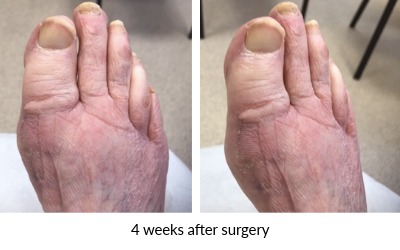
The surgical team at The Yorkshire Foot Hospital provides clear, expert advice so you can feel confident in your journey toward a pain-free life.