

WE TREAT
Knee Pain Assessment and Treatment in Leeds
From sprains and strains to arthritis, we provide expert care tailored to your needs.
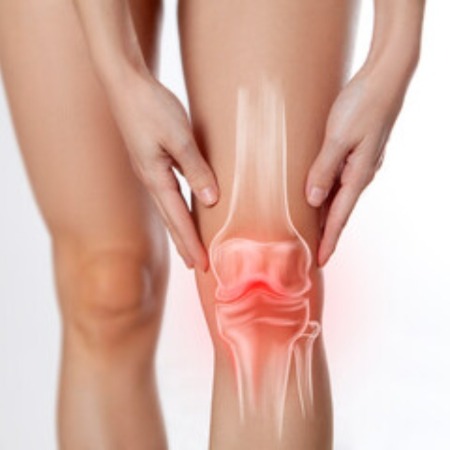

At Foot Pain Centres of Leeds, our specialist Podiatrists manage a wide range of knee conditions in both adults and children.
Whether your pain stems from structural issues like knock-knees, a sudden fall, or a sports injury, we provide targeted biomechanical solutions.
Common Knee Conditions We Treat
The knee is a remarkably complex joint. Because your body functions as a kinetic chain, knee injuries are often interrelated with issues in the pelvis, feet, and ankles. Biomechanical imbalances in one area frequently manifest as persistent pain in another.
Patellofemoral Joint Pain (Runner’s Knee)
This involves pain at the front of the knee or around the kneecap. It typically worsens with repetitive movements like running or climbing stairs. You may notice a grinding or clicking sensation behind the kneecap, often caused by:
- Biomechanical Imbalance: Weakness in the inner quadriceps (VMO) or a tight Iliotibial (IT) band.
- Foot Pronation: As the feet roll inwards, they force the knee to follow, placing excessive strain on the joint.


Patellar Tendonitis (Jumper’s Knee)
This condition affects the tendon connecting the kneecap to the shinbone. It is common in athletes involved in jumping or twisting sports like badminton and basketball.
- The Cause: Repetitive strain or foot pronation increases rotation in the thighbone, pulling the tendon out of alignment.
- Our Approach: We assess your pelvic alignment and foot mechanics to reduce stress on the tendon using orthotic therapy and rehabilitation.
Meniscal or Cartilage Knee Pain
The menisci are C-shaped cartilage “shock absorbers.” When they become irritated or injured, you may experience stiffness, swelling, and difficulty straightening your leg.
- Assessment: We examine your gait and foot posture to see how your lower limb loading affects the knee.
- Treatment: We focus on joint mobilisation and activity modification to restore comfortable movement.

Osgood-Schlatter’s Disease
Commonly affecting active teenagers (ages 10–15), this condition causes a painful, bony lump to develop on the shin bone just below the knee.
- The Cause: Overuse of the quadriceps during growth spurts leads to repetitive trauma where the tendon attaches to the bone.
- Solution: We provide biomechanical correction and strengthening exercises to stabilise the knee and reduce tension on the growing bone.

Our Specialist Assessment Process
We don’t just look at the knee in isolation. Our Podiatrists perform a comprehensive evaluation of:
- Structural Foot Mechanics: Identifying over-pronation or misalignments.
- Lower Limb Rotation: Assessing the thigh and shinbone alignment.
- Pelvic and Hip Stability: Ensuring your foundation is level.
Treatment Options:
- Orthotic Therapy: Custom insoles to correct foot posture and knee tracking.
- Joint Mobilisation: Hands-on techniques to improve range of motion.
- Rehabilitation: Tailored strengthening exercises for long-term stability.