


WE TREAT
Verrucae (Plantar Warts) Assessment and Treatment in Leeds
Plantar warts are caused by a virus and can be painful if left untreated. We tailor treatment to your needs.
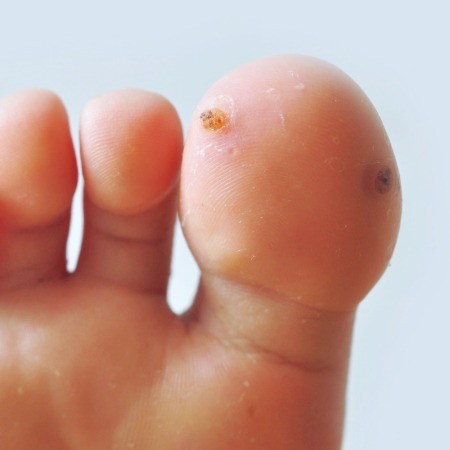
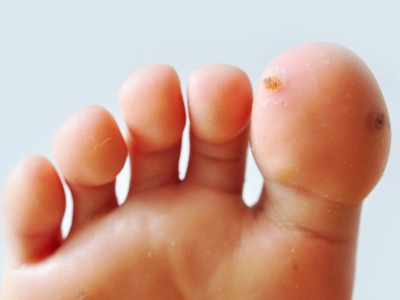
Verrucae are simply warts that appear on the soles of the feet or around the toes. They are caused by the Human Papilloma Virus (HPV), which is highly contagious and spreads through direct skin-to-skin contact. While there are many strains of HPV, the ones causing verrucae are specific to the skin.
How do you catch a verruca?
The virus thrives in warm, damp environments—think swimming pools, communal showers, and gym changing rooms. You can contract a verruca simply by walking across a floor previously used by an infected person. Small, often invisible nicks or scratches on your feet make it easier for the virus to enter the skin.
Who is most at risk?
Verrucae are most common in children and teenagers, largely due to frequent use of communal facilities. While some people develop a natural immunity over time, many remain susceptible.

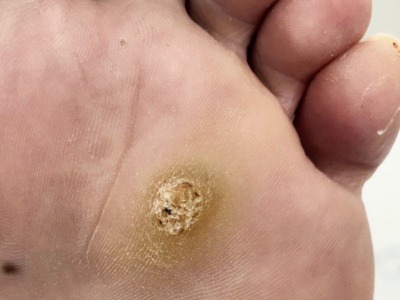
How to identify a verruca
Look for these common signs:
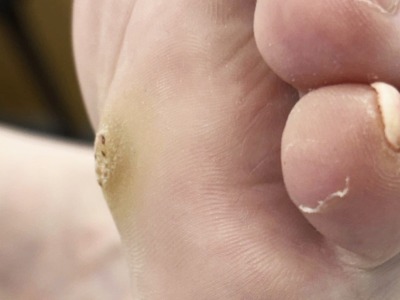
- A small, “cauliflower-like” growth on the sole of the foot.
- Tiny black dots (these are small, clotted blood vessels).
- Pinch pain: Verrucae are often more painful when squeezed (like a spot) than when pressed directly.
- They can appear individually or in “mosaic” clusters.
Are they serious?
While generally harmless, verrucae can become very painful if they develop on weight-bearing areas like the heel or ball of the foot. Commonly, the body produces hard skin (callus) over the wart, which increases the pressure and discomfort.
When to see a Podiatrist
You should seek professional help if:
- You have diabetes, poor circulation, or a weakened immune system (never self-treat in these cases).
- The verruca is becoming increasingly painful or spreading.
- Over-the-counter treatments have failed to work.
- The surrounding skin becomes red, hot, or inflamed.
Verruca treatment options at Foot Pain Centres of Leeds
If your verruca(e) is painful, spreading, or unsightly, we offer several professional treatments.
Professional Strength Acids: Stronger and more effective than over-the-counter pharmacy kits.
Effective treatment for persistent verrucae
If you have a painful or stubborn verruca that has failed to respond to over-the-counter treatments, verrucae needling may be an effective solution.
At Foot Pain Centres of Leeds, our specialist Podiatrists provide advanced verruca treatments, including Falknor’s Needling, for patients throughout Leeds and Yorkshire. This procedure is often recommended for verrucae that have been present for months or years and have not responded to traditional treatments.
What is verrucae needling?
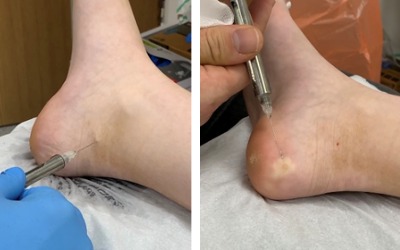
Verrucae needling, also known as Falknor’s Needling, is a minor surgical procedure performed under local anaesthetic.
The aim is not simply to destroy the verruca but to stimulate your immune system to recognise and eliminate the HPV virus.
During the procedure:
- The foot is fully numbed using local anaesthetic.
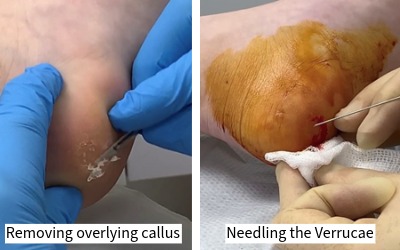
- The verruca is punctured multiple times with a sterile needle.
- Viral particles are introduced into deeper tissues.
- This triggers an immune response against the virus.
- The body then works to clear the verruca naturally.
In many cases, untreated verrucae elsewhere on the foot may also resolve following treatment.
Benefits of verrucae needling
High Success Rates
Needling can be highly effective for persistent verrucae that have not responded to conventional treatments.
Single Treatment Session
Many patients only require one procedure.
Treats the Underlying Virus
Rather than simply removing skin, needling encourages the immune system to target the viral infection.
Suitable for Resistant Verrucae
Often recommended when acids, cryotherapy or other treatments have failed.
May Clear Multiple Verrucae
Stimulating the immune system can sometimes lead to resolution of other untreated verrucae.
Who is suitable for verrucae needling?
You may be suitable if you have:
- Long-standing verrucae.
- Painful plantar verrucae.
- Multiple verrucae.
- Mosaic verrucae.
- Previous treatment failure.
- Verrucae affecting work, sport or everyday activities.
A thorough assessment is carried out to determine whether needling is the most appropriate treatment.
What happens during treatment?
Initial Assessment
Your Podiatrist will assess:
- The size and location of the verruca.
- Previous treatments.
- Medical history.
- Suitability for local anaesthetic.
Procedure
The procedure typically takes around 30–45 minutes.
Aftercare
Following treatment:
- Mild discomfort is expected for a few days.
- Normal walking is usually possible immediately.
- The foot should be kept clean and dry.
- High-impact activities may need to be avoided temporarily.
How successful is verrucae needling?
Clinical studies have demonstrated good success rates, particularly for long-standing and treatment-resistant verrucae.
Success depends on:
- Duration of the verruca.
- Number of lesions present.
- Overall health and immune function.
- Compliance with aftercare advice.
No treatment can guarantee complete clearance, but needling is considered one of the most effective options for stubborn verrucae.
Frequently Asked Questions
Is verrucae needling painful?
No. The procedure is performed under local anaesthetic, so the area is numb during treatment.
How long does recovery take?
Most patients return to normal daily activities within 24–48 hours.
Will the verruca disappear immediately?
No. The body’s immune response develops gradually, and improvement is usually seen over several weeks or months.
Can children have verrucae needling?
This depends on age, suitability and ability to tolerate local anaesthetic. Assessment is required.
Are there alternatives to needling?
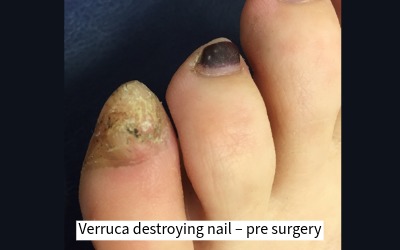
Yes. Depending on the verruca, options include a surgical excision.
Surgical excision under local anaesthetic

Prevention Tips
- Wear Flip-Flops: Always use footwear in communal changing rooms and showers.
- Don’t Share: Avoid sharing towels, shoes, or socks.
- Dry Thoroughly: Ensure feet are dry after washing, especially between the toes.
- Use Verruca Socks: If you have an active verruca, wear a waterproof sock while swimming to protect others.
Why choose Foot Pain Centres of Leeds?
Specialist Podiatry Team
We focus exclusively on the diagnosis and treatment of foot, ankle and lower limb conditions.
Advanced Verruca Treatments
We offer a range of evidence-based treatments and will recommend the most appropriate option for your individual circumstances.
Comprehensive Assessment
We investigate the underlying factors affecting healing and provide personalised treatment plans.
Convenient Leeds Clinics
Appointments are available at our Leeds locations with easy access and parking.