

WE TREAT
Iliotibial Band & Trochanteric Bursitis Assessment and Treatment in Leeds
From overuse to chronic irritation, we provide expert care tailored to your needs.
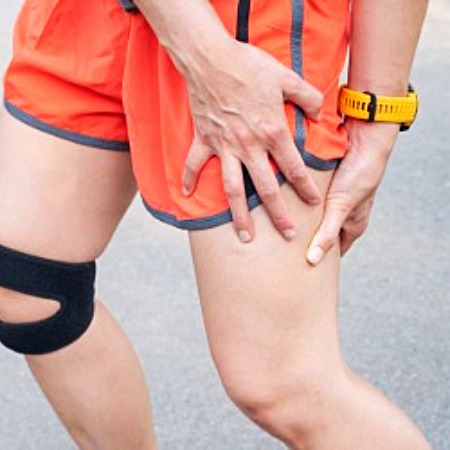

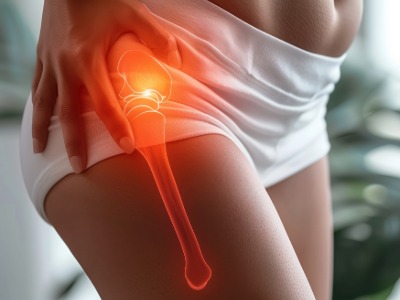
Pain on the outside of the hip or along the outer thigh often stems from irritation of the Greater Trochanter or tension within the Iliotibial Band (ITB). These conditions frequently link back to abnormal lower limb biomechanics; specifically, how your feet function dictates the alignment and loading of your knees, hips, and pelvis.
Understanding ITB Syndrome and Hip Pain
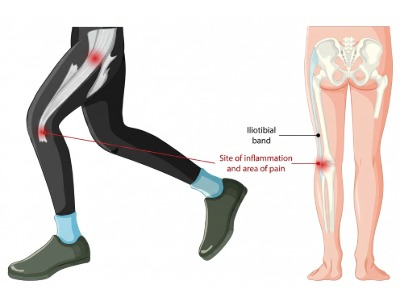
Iliotibial Band Syndrome is a debilitating condition that frequently affects endurance runners. It occurs when the ITB creates friction as it passes over the bony protrusion on the outside of the knee during movement.
Overuse leads to mechanical irritation, causing inflammation within the band and the underlying bursa. Several factors can aggravate this condition:
- Terrain: Running downhill or on highly cambered (sloped) roads.
- Technique: Over-striding during running.
- Lateral Movement: Side-to-side sports such as tennis and rugby.
- Trochanteric Bursitis: Inflammation of the fluid-filled sac near the hip joint.

Our Comprehensive Assessment
We don’t just treat the symptoms; we fix the mechanics. Our expert assessment includes:
- Tendon Mapping: Identifying the exact state of the tissue and any potential tears.
- Foot Posture Analysis: Checking for “rolling in” and alignment issues.
- Mobility Testing: Evaluating ankle and calf flexibility.
- Gait Analysis: Observing your unique walking and running patterns.
Why Biomechanics Matter
Poor foot biomechanics and incorrect running shoes have a pronounced effect on ITB tension. At Foot Pain Centres of Leeds, we pay close attention to patients presenting with:
- High Arched Feet (Supinators): Which often lack natural shock absorption.
- Low or Flattened Arches: This can cause the leg to rotate inwards excessively.
- Leg Length Differences: Creating asymmetrical loading on the hips.
- Knee Alignment: Increased internal knee rotation that pulls on the ITB.
Our Specialist Assessment
Our Podiatrists perform a thorough clinical examination to exclude other issues, such as meniscal tears, while studying the inter-relationship between your foot mechanics and your symptoms. We analyse your gait, hip rotation, and pelvic alignment to understand exactly how forces travel through your body.
Targeted Treatment and Recovery
We design our treatment plans to reduce strain on the hip and outer thigh while improving your overall movement efficiency. Recovery strategies include:
- Orthotic Therapy: Custom-made devices to correct foot mechanics and realign the lower limb.
- Activity Modification: Advice on reducing running distance and transitioning to flat, soft surfaces.
- Rehabilitation: Targeted muscle strengthening for the quadriceps, hamstrings, and hip abductors.
- Immediate Relief: Ice massage and mobilisation techniques to settle inflammation.
- Footwear Analysis: Ensuring your running shoes match your specific foot type and gait.
Our goal is to relieve your pain, restore balanced movement, and prevent the injury from returning. Don’t let hip or knee pain stop your progress.